
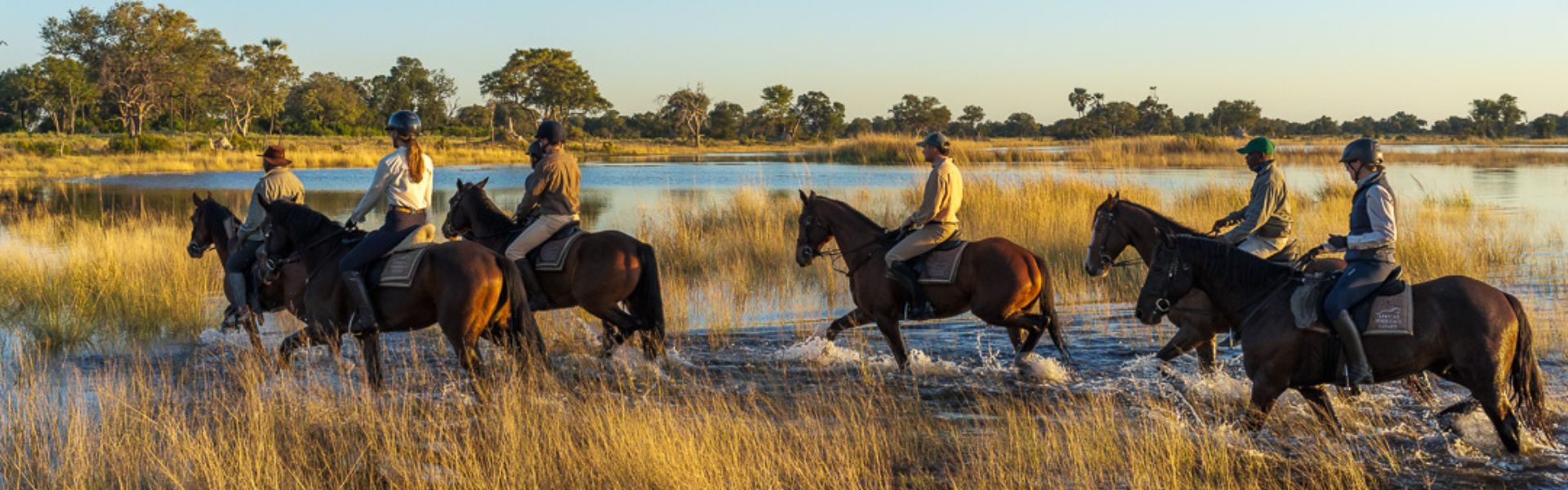
Every season brings something different to the Okavango Delta, so there really isn’t a bad time for a safari. If you’re after the classic Delta experience, July to September is when the floodwaters are at their highest, but don’t rule out the other seasons too quickly. Each offers a very different kind of magic.
One of the most important things to understand is that the Okavango’s flood arrives during Botswana’s dry season. It takes several months for floodwaters to reach Botswana from Angola’s highlands, and the timing can be unpredictable. But the magic is that it’s one of the few areas in the country with water, and it attracts a huge variety of wildlife, earning the nickname Africa’s Eden.
June to September: High Water & Classic Okavango
This is when the Delta really earns its reputation as a water wilderness, and what you’ll see in most photographs and documentaries. Expect cooler temperatures, incredible wildlife viewing, and the chance to experience mokoro safaris, which are unique to the Delta. This is when splashy canters at Kujwana and Macatoo are at their best! Here you’ll see large herds of lechwe gathering in the wetlands, along with big herds of elephant, buffalo, and plains game. Wild dogs and big cat sightings are common in the long golden grass, and you’ll find hippos and crocodiles in the deeper channels.
September to November: Dry, Hot & Wildlife-Rich
As the flood slowly retreats, the Delta becomes increasingly dry, so wildlife concentrates around the remaining water. This can mean fantastic game viewing, with huge herds of elephants, buffalo, and antelope drawn towards the permanent channels and lagoons. It’s a brilliant time to spot wild dogs and predators as the grass is short and the islands are bigger. As it’s hot, expect to ride in the early mornings and late afternoons, being rewarded with some of the best sunsets.
December to May: Green Season
This is the green season, and it’s a completely different Okavango experience. It’s warmer, wetter and much quieter, with lush green grass, dramatic afternoon storms and brilliant birdlife. Young zebra, wildebeest, impala and other plains game make for some lovely sightings from horseback. The long grass and plentiful water mean wildlife is more spread out, so predator sightings can take a little more patience, but that’s part of the fun. If you like quieter safaris and don’t mind a bit of rain, this season is seriously underrated.
By May, water levels can be rising noticeably, wildlife starts moving towards the waterways, and the cooler, drier weather makes for lovely riding. If experiencing mokoro safaris is important to you, then Cha Cha Metsi is a great option as it is on a permanent lagoon, which makes mokoro trips possible for much more of the year.