
Best Time to Visit Botswana for a Horse Safari
There’s no single “best time” to visit Botswana on horseback, because Botswana isn’t really one destination. The Okavango Delta, the Makgadikgadi Salt Pans and the Tuli Block each run on their own seasonal clock, and each one offers something different throughout the year.
The Okavango Delta – Africa’s Eden
Honestly, there’s no bad time to visit the Delta. Every season is special in its own way, and it really comes down to what you want from your horse safari and what your budget is.
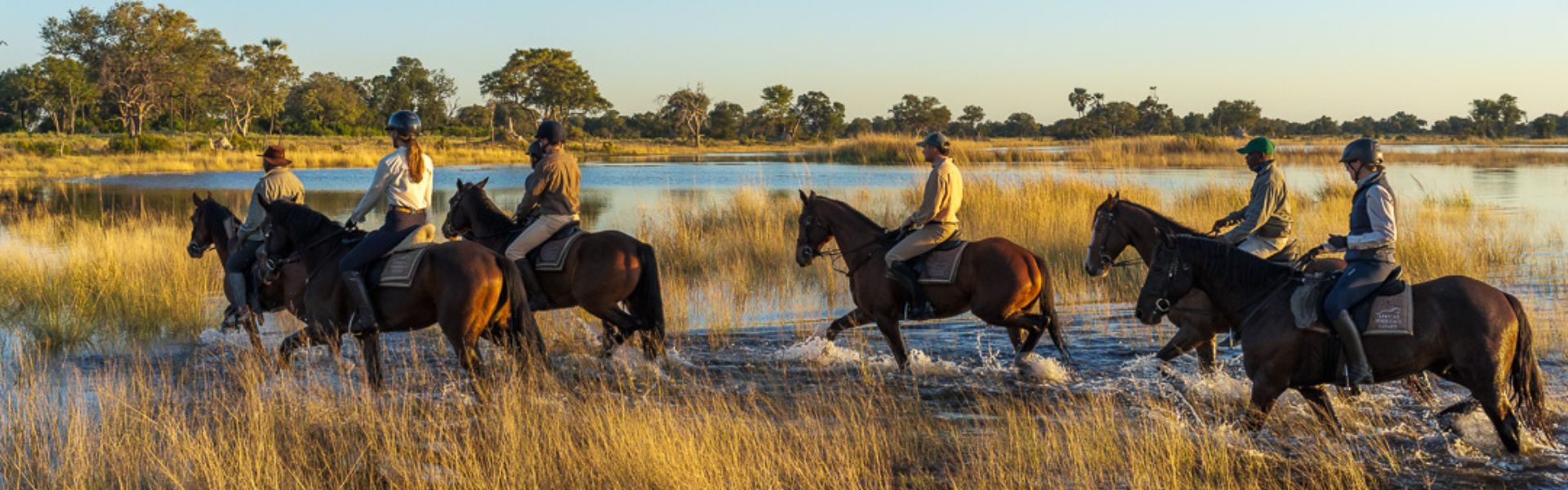
If you’ve always dreamed of cantering through the floodwaters, late June to early October is generally the best window. This is when the Delta is usually in flood, and you get those wonderfully splashy canters through the water, though nature likes to keep us on our toes, so water levels can never be guaranteed. This dry season is also fantastic for wildlife: the surrounding landscape dries out, so there’s a huge abundance of animals moving into the Delta, and the cooler temperatures between June and August make for lovely days in the saddle. It’s exactly this pattern that makes horse riding at Kujwana and Macatoo so popular at this time of year. It’s also the most amazing time for water-based activities like Mokoro safaris. Gliding silently through the reeds, surrounded by dragonflies, and looking up to see a herd of elephants in the distance is an experience unlike anything else in Africa
October can be hot and dusty as the first rains approach, but this is one of the most exciting times for wildlife in the Delta. Water becomes increasingly scarce, concentrating enormous herds of elephant, buffalo, zebra and antelope around the remaining water, with some sightings numbering in the thousands. It’s also an exceptional time for predators, with some of the best chances of seeing big cats and wild dogs. Less chance of splashy canters, but heaven for photography.
Don’t rule out the green season either, from December to April. The landscape turns lush, there are fewer visitors, and plenty of young animals around. You won’t get the classic flooded-Delta experience, but you might catch a thunderstorm rolling in that makes for an incredible photo backdrop, and there’s something satisfying about earning a predator sighting when the bush is thick. Cha Cha Metsi is a great pick if this is your season; it has permanent water and offers mokoro (traditional dugout canoe) excursions. Most other camps can only offer this when the floodwaters are high enough.
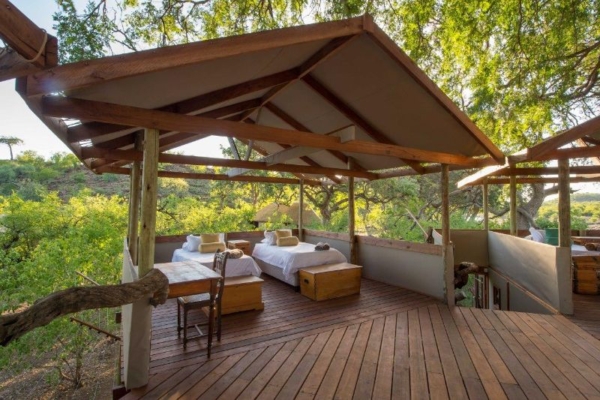
If we had to pick one window for a first-time horse safari in the Okavango, it would be July to September, that perfect trio of splashy canters, cooler riding weather and sunny skies. And if fly-camping under the stars appeals, some of our lodge-stays offer a one-night sleepout, or you could embark on a more adventurous 7-night mobile fly-camping safari.
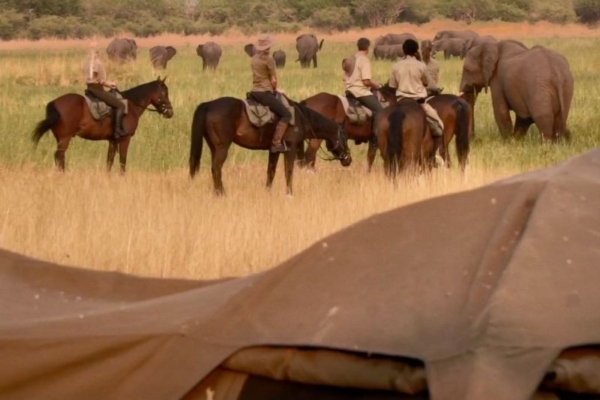
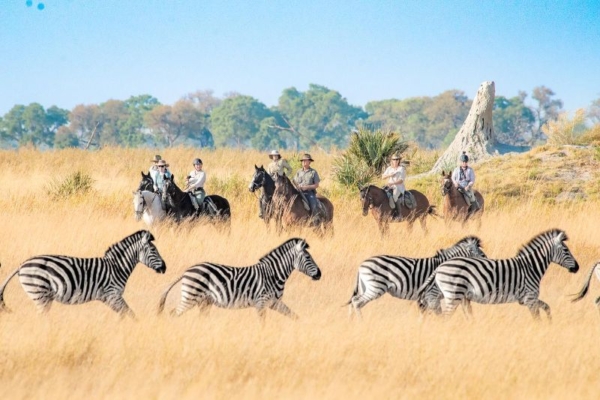
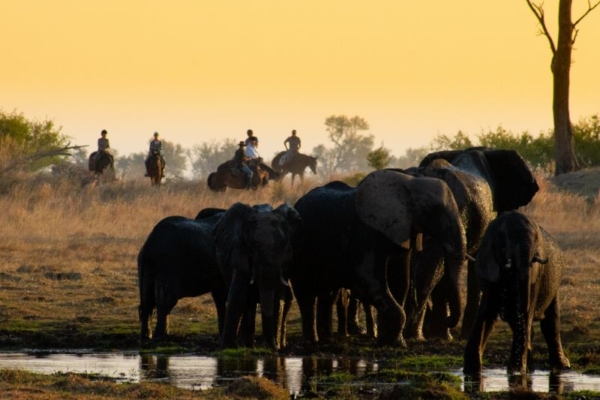
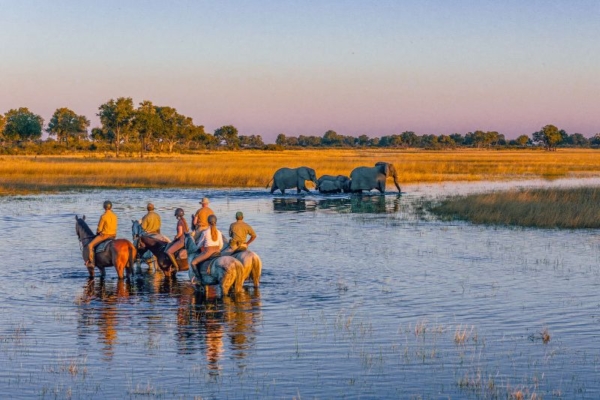
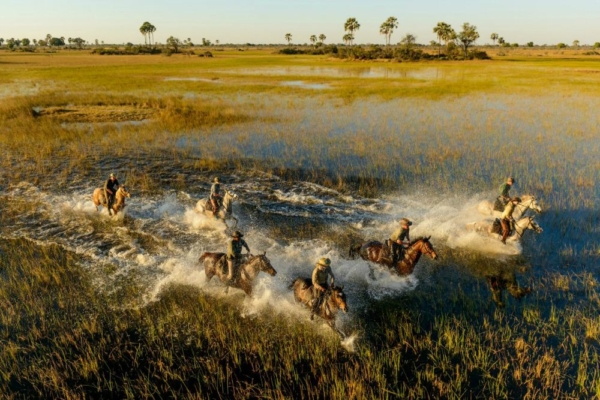
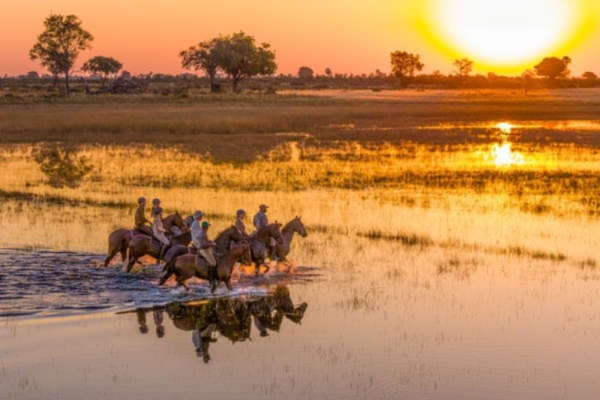
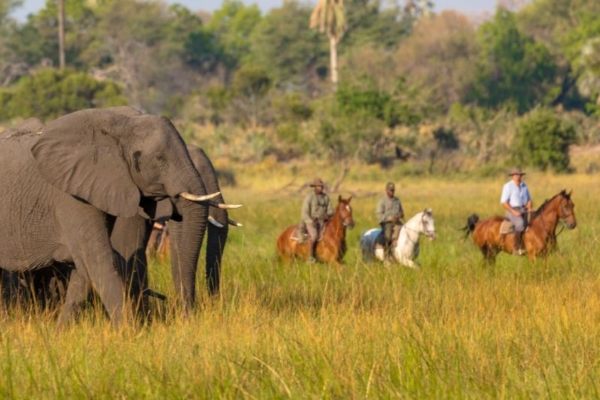
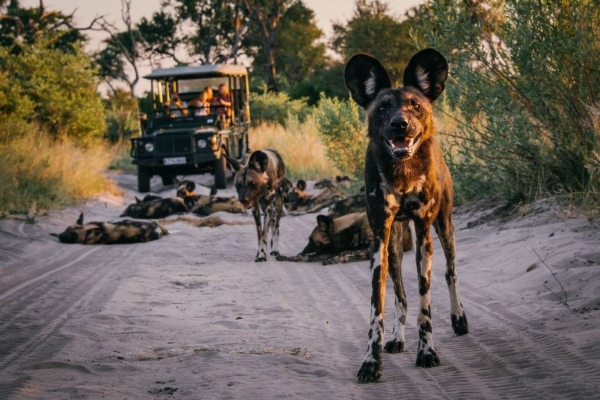
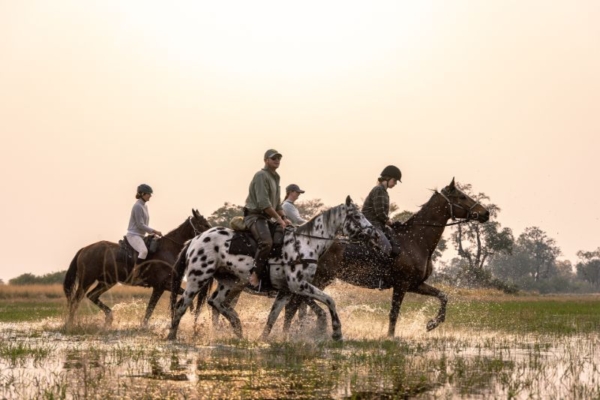
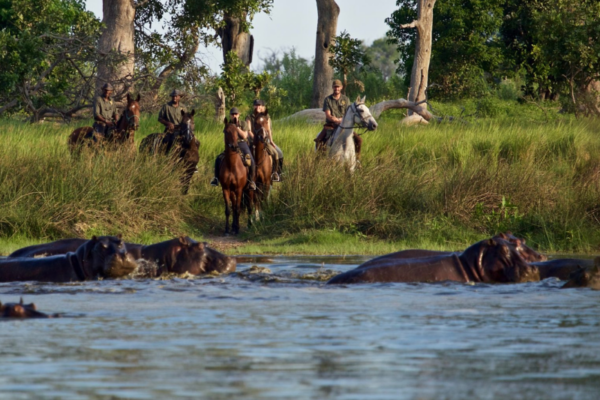
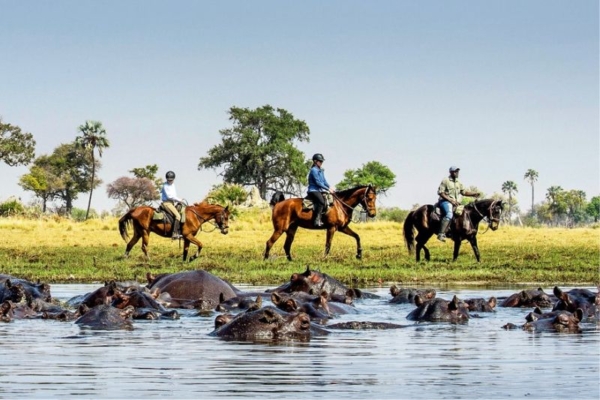
Luxury horse riding holidays in The Okavango Delta – Mobile Safari, Cha Cha Metsi, Macatoo and Kujwana
The Makgadikgadi Salt Pans: Botswana’s Best-Kept Secret
This is genuinely one of Botswana’s best-kept secrets, and far too few people know about it. Most people have heard of the Great Migration in Kenya and Tanzania, but Botswana has its own extraordinary zebra migration. Every year, following the summer rains, thousands of zebra and wildebeest move towards the Makgadikgadi and Nxai Pan grasslands, and experiencing it from horseback is something truly special.
The best window is generally January to March, though it depends entirely on when the rains arrive; nature doesn’t follow our calendars. This is when the vast, dry salt pans you might recognise from those endless-white-space photos transform completely. Seasonal rains fill parts of the pans, creating enormous mirror-like reflections, while flamingos arrive in their thousands. You can ride through green grasslands with zebra moving nearby, while flooded sections of the pans create spectacular reflections around you.
It’s a completely different experience to the dry season, roughly May to October, when the landscape is dry, vast and otherworldly, with seemingly endless salt pans perfect for long, exhilarating canters across open space. Both are spectacular in their own way. If you want those iconic fast canters across the pans, go dry season. If you’d rather see one of Botswana’s least-known wildlife spectacles, surrounded by water, flamingos and zebra, January to March is very special. Camp Kalahari is the base for this ride, with San Camp available as an ultra-luxury upgrade if you’d like to stay in the same area with a higher level of comfort.
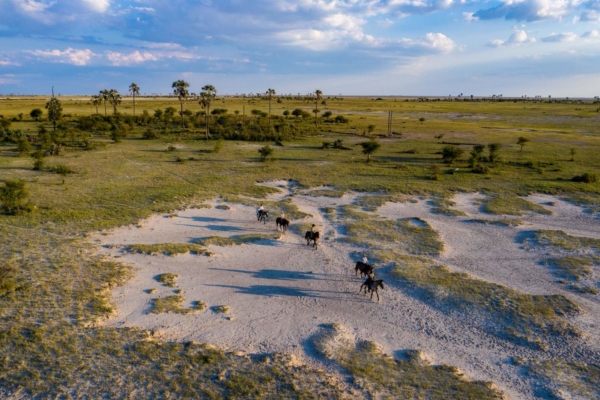
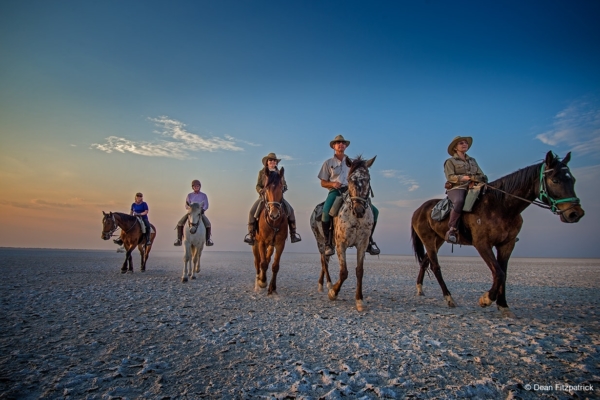
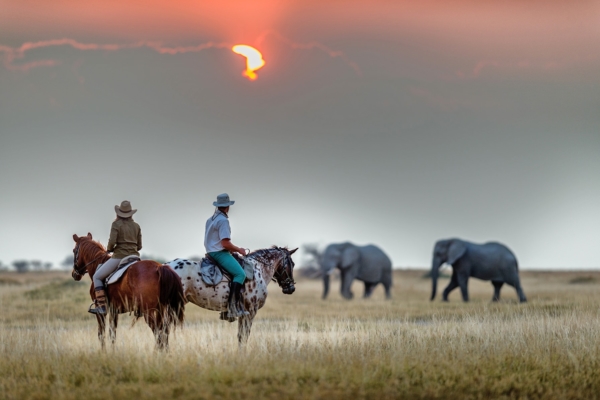
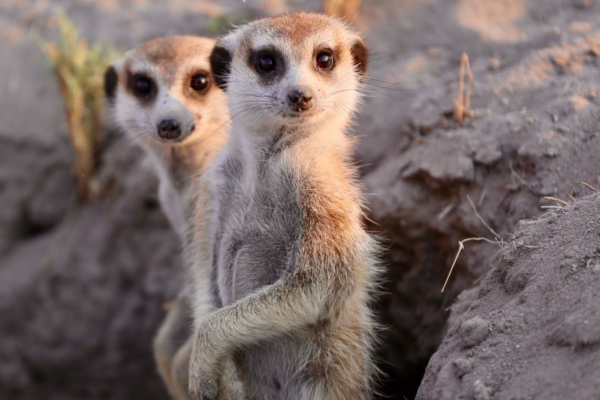
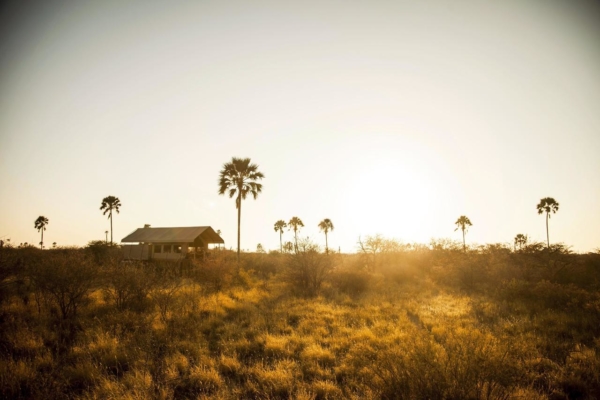
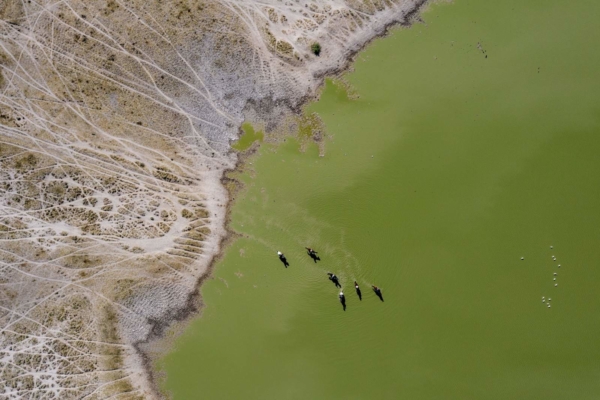
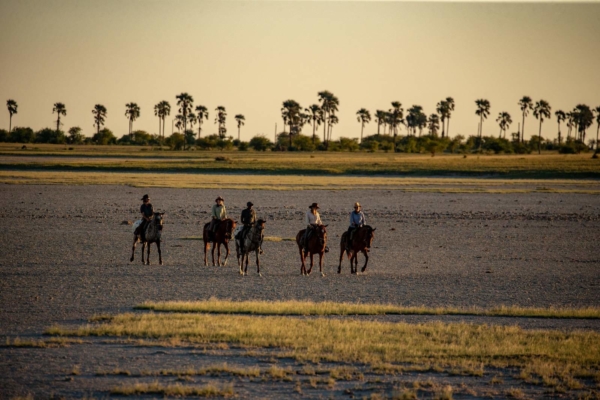
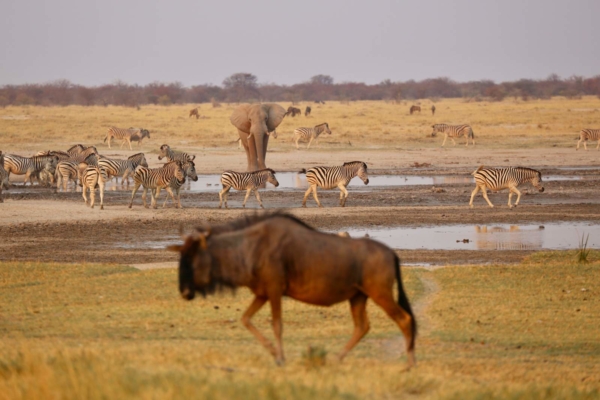
Horse riding holidays in Botswana – Makgadikgadi Salt Pans
Mashatu and the Tuli Block: Magic All Year Round
The Tuli genuinely changes with every season, and there’s something special about pretty much every month. If we could, we’d go on a horse safari in the Tuli every month just to watch the landscape shift.
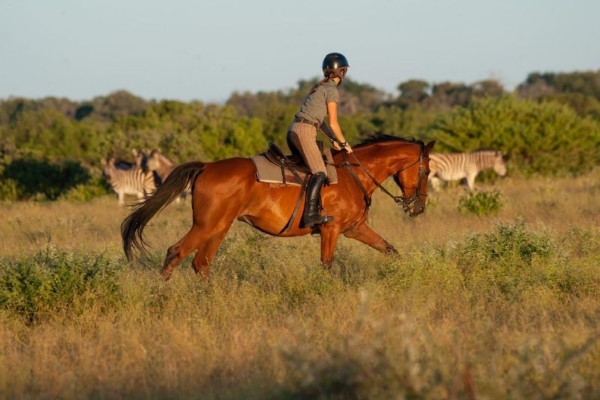
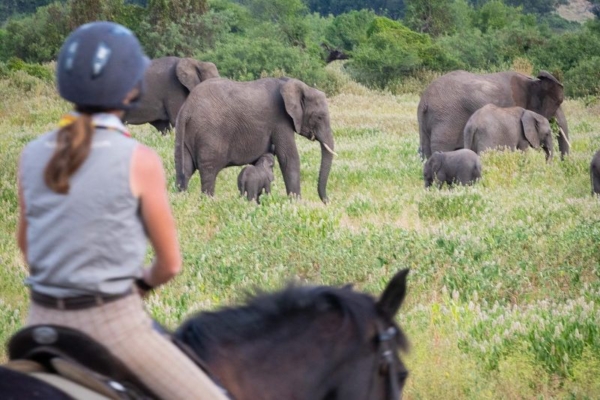
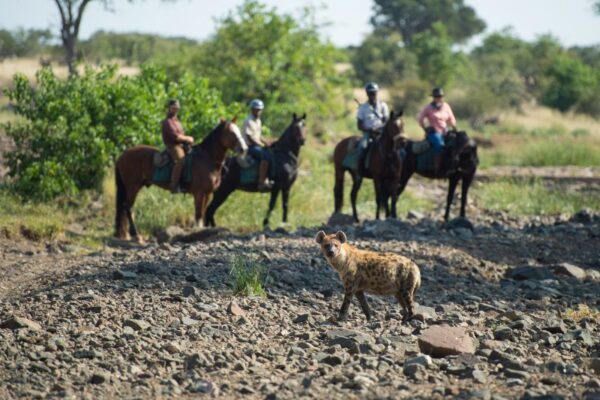
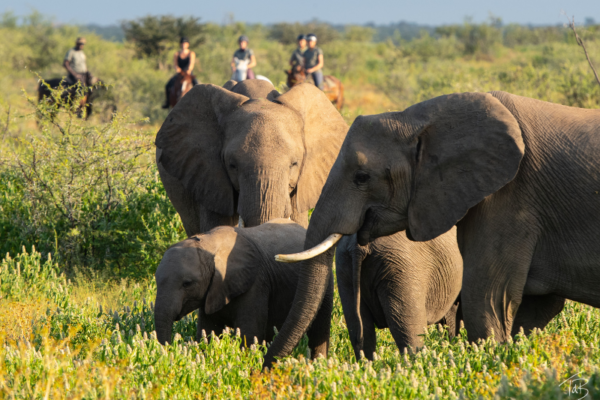
April to June is a personal favourite: the bush is still lush and green after the summer rains, but there’s very little chance of thunderstorms. The grass grows long, and it feels like riding through a sea of green; birdlife is incredible, and the antelope, zebra and giraffe born during summer are still only half grown. The long grass can make big cats harder to spot, and most sightings happen from a vehicle rather than horseback, but Tuli is still a fantastic place to see them.
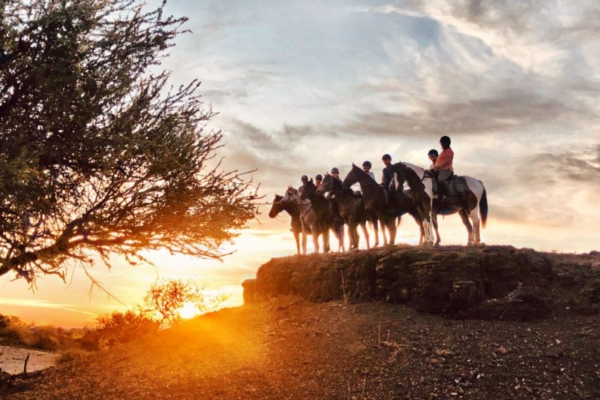
July to September is when everything turns golden. It’s probably the easiest time for riding, with cool, crisp mornings, sunny days and chilly nights, so pack layers for evenings around the fire. The stars are extraordinary, and the contrast between the drier bush, red sand and green mopane trees is beautiful, especially from the top of a kopje with sundowners beside an iconic baobab tree.
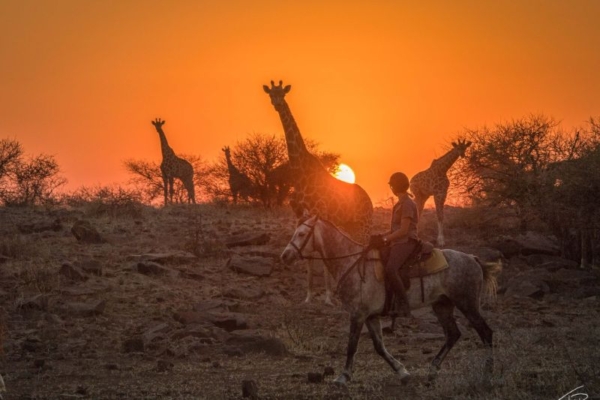
October and November can be some of the best months for wildlife, as scarce water pulls huge herds of elephants, zebra and antelope to the remaining pools. The catch is that it’s hot and dusty before the first rains, but those dusty, golden-light canter videos are unforgettable, and the sunsets can linger for hours.
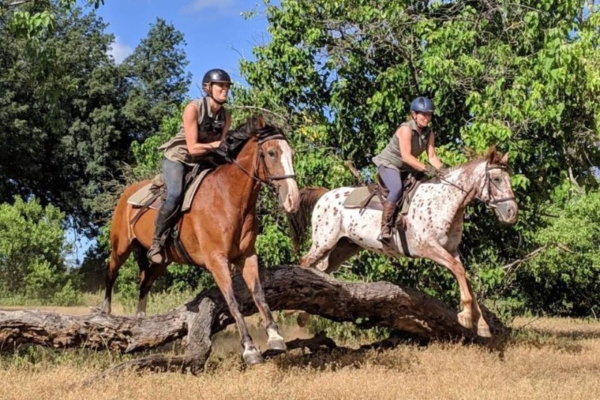
Then December to March brings the summer rains and transforms the whole place again. Thunderstorms can be short-lived but genuinely epic, creating an incredible photo backdrop, though the weather can change quickly, so come with a sense of adventure.There are a few more bugs around after the first rains in late November and early December, but you’re rewarded with splashy canters as the rivers fill and, sometimes, the chance of watching elephant herds playing in the river. By late February into March, the landscape fills with bright yellow flowers as far as you can see, it genuinely looks like a painting.
Our Tuli Trail runs through Mashatu Game Reserve every week of the year. If you would like to combine Mashatu with South Africa in one trip, our South Africa & Botswana African Explorer offers an incredible itinerary.
Horse riding holidays in Botswana – The Tuli Trail & African Explorer
So, When Should You Go on a horse safari in Botswana?
If you want the best all-round window, June to September is hard to beat. You’ll have excellent wildlife viewing in the Tuli, the best chance of catching the Okavango’s famous floodwaters, and those epic open-space canters in the Makgadikgadi. That said, January to April has its own magic, with lush green landscapes, dramatic skies, fewer visitors and the chance to experience Botswana at its most vibrant.
Smaller camps can book up well ahead, especially in our winter months, so it’s worth getting in touch early. Tell us what you want most, whether that’s splashy canters, the zebra migration, big-cat sightings, quieter camps or adding Victoria Falls to your trip, and we’ll help match the right riding area and time of year to you.
Make the Most of Your African Horse Riding Holiday
We showcase selected rides that combine sought-after adventure, professional guiding, quality accommodation and horses that are as important as the guests. You also get unbiased comparisons of different rides and personal first-hand advice. We warn you, Africa is highly addictive and exploring it on horseback is an unforgettable experience.
Chat to one of our safari gurus to help you choose the perfect horse safari for you. Start planning your adventure with us today.
Frequently Asked Questions
What's the best time to see Botswana's zebra migration on horseback?
Generally, January to March, after the summer rains, at the Makgadikgadi Salt Pans, though the exact timing shifts with when the summer rains arrive. This is when zebra and wildebeest move onto the Makgadikgadi and Nxai Pan grasslands in huge numbers.
When is the Okavango Delta in flood?
Usually late June to early October, when floodwaters from Angola make their way into the Delta and create the splashy, water-based canters riders love. Water levels vary year to year and can never be fully guaranteed.
Is there a rainy season to avoid in Botswana?
Not really “avoid”, more “know what you’re getting.” The rains generally fall from December to March, and this green season brings lush landscapes, dramatic skies and fewer visitors, along with the trade-off of harder predator spotting and a chance of getting wet.
Can I visit more than one Botswana riding area in one trip?
Yes. One of the most popular combinations is the Okavango Delta and Makgadikgadi Salt Pans, as they offer completely different riding experiences and are relatively easy to combine into one Botswana itinerary. You can also add Victoria Falls to your horse safari, making it a fantastic option if you want to combine riding, wildlife and one of Africa’s great natural wonders in a single trip.
What's the best time to ride in the Tuli Block?
July to September is generally the easiest riding, with cool mornings, sunny days and golden light. April to June is greener and quieter, while October and November bring the best wildlife viewing around scarce water sources, with more heat and dust.


